
Good Stories from the Good City: Our Vision
By Faye Lane
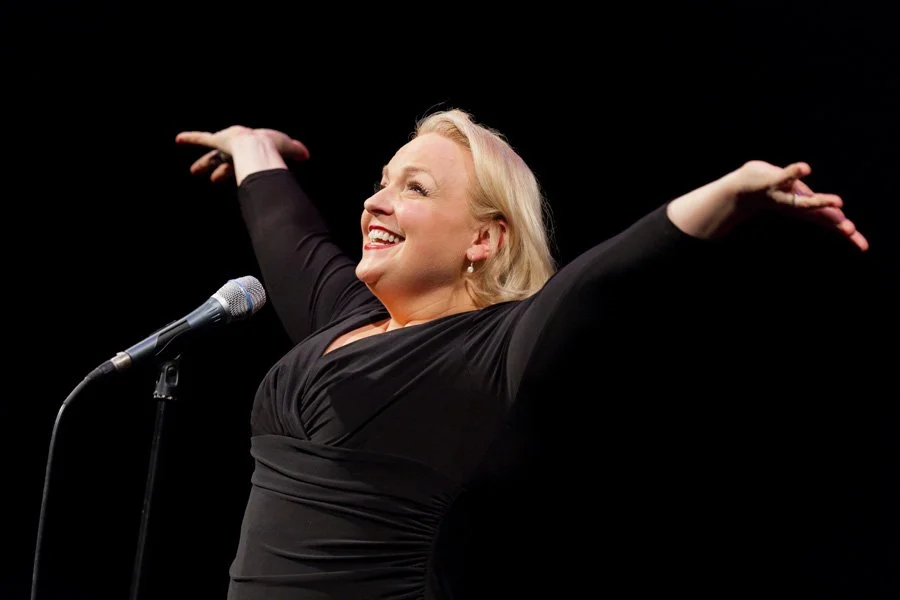
Dallas is a good city.
I say that not as a slogan, but as a lived experience. I have seen it in airport waiting lines, DART trains, school auditoriums, in small businesses and big-hearted neighbors, in quiet acts of decency that never make the news. Dallas is vibrant, complicated, imperfect—and deeply, stubbornly good.
It is the honor of my life to serve as Artist-in-Residence and Chief Inspiration Officer at Thanks-Giving Square. Yes, that’s a title I helped invent. And yes, it is as joyful as it sounds. But make no mistake: what we are building here is not decorative. It is not an accessory to civic life. It is meant to be essential.
My vision is simple, and bold: a series of radically inclusive storytelling circles, held in our teaching space—the Humanitarium—a place I consider sacred civic ground. In these circles, a wide cross-section of Dallas gathers. Different neighborhoods. Different beliefs. Different political leanings. Different incomes. Different ages. All in one room.
No phones. No scrolling. No avatars. Just people.
Why storytelling?
Because we are living in an age of endless information and diminishing connection. For the first time in human history, we have access to nearly all of human knowledge in the palm of our hand. And yet, many of us feel lonely. Fragmented. Unseen.
Information is not the same as intimacy.
Throughout history, storytelling has not only carried facts; it has carried meaning. It has helped us remember who we are. It has built empathy, imagination, and moral courage. Storytelling keeps the soul supple. It keeps a community human.
Dallas deserves to be united and inspired. But how do you unite a city as richly diverse as ours? How do you bridge political divides, social and economic differences, religious perspectives?
You put people in a room together and invite them to tell the truth about their lives.
It is the only real competition we have for technology. No algorithm can replicate the trembling voice of a human being telling a story that costs them something. No machine can recreate the sacred moment when someone across the circle leans forward, eyes bright, and whispers, “Me too.”
We all carry the same stories. Love. Loss. Fear. Hope. Regret. Redemption. The details change. The zip codes change. The vocabulary changes. But the human experience does not.
When we sit together long enough, we discover this. And something shifts.
Storytelling builds bridges and sneaks under fences. It disarms suspicion. It softens certainty. It reminds us that we belong to one another.
And yes—it feels wonderful.
But we are not gathering simply to feel good. We are gathering to become good.
Our storytelling circles are shaped around the virtues that define a flourishing human life: courage, integrity, presence, compassion, forgiveness, hope. Each gathering is guided by prompts that invite depth rather than performance.
Courage: Tell us about a time you did something you were afraid to do—and did it anyway.
Integrity: Tell us about a moment when you stood up for something you believed in. Or stood up for someone who wasn’t in the room.
Presence: Tell us about a time you truly showed up for someone—or a time you didn’t—and what that taught you.
These are not casual anecdotes. These are turning points. These are the stories that make us better friends, better parents, better neighbors, better citizens.
At Thanks-Ggiving Square, we are treating storytelling as sacred civic infrastructure. Just as a city needs roads and bridges and water lines, it also needs spaces where people can see and be seen. Where compassion is practiced, not just praised. Where diversity is not managed, but celebrated.
Dallas is defined by its diversity and its compassion. Our work is to nurture both—and to invite people into a shared vision of the greater good.
We will do it one circle at a time. One brave voice at a time. One story at a time.
And I promise you this: it will be important.
It will also be a lot of fun.
I hope you’ll pull up a chair!