
What I Learned About Storytelling at South by Southwest
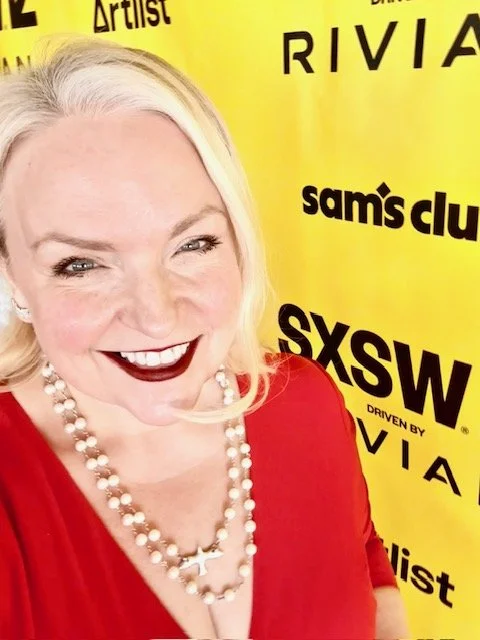
I went to South by Southwest expecting to learn about the future.
Artificial intelligence. Media disruption. The next big platform. The next big thing.
And I did learn about all of that.
But what stayed with me—what followed me home—was something much older.
Storytelling.
Not the polished, performative kind. Not “once upon a time.”
The real thing.
Personal storytelling.
The kind that happens when a person sits across from you, takes a breath, and tells the truth about their life.
At SXSW, there was a great deal of conversation about AI—how powerful it is, how quickly it’s evolving, how it will reshape the way we live and work. There were sessions about analytics, algorithms, and how to create viral content. There were entire tracks devoted to podcasts and digital media and how to capture attention in an increasingly crowded landscape.
And yet, in the midst of all that noise, one quiet idea rose above the rest:
The most powerful stories are still the ones we tell each other face to face.
One speaker said something that stopped me in my tracks: media can be controlled. Narratives can be shaped. But what cannot be controlled are the stories we share, person to person.
No algorithm can replicate that moment.
No machine can manufacture it.
Because when someone tells a story that matters—really matters—you feel it. You recognize it. Something in you answers back.
“Me too.”
That is where empathy lives.
And in a world saturated with information, empathy is becoming one of our most endangered resources.
We have more access to knowledge than at any point in human history. We can generate content instantly. We can analyze behavior, predict trends, and optimize for engagement.
But information is not the same as intimacy.
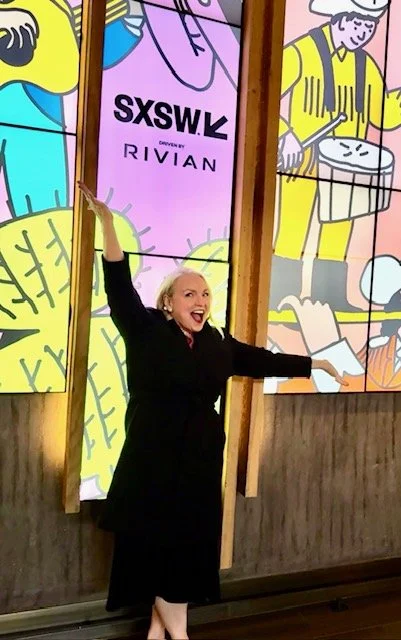
At SXSW, I also saw how storytelling is changing form. Two-minute stories. Short-form video. Podcasts that begin with nothing more than two people and a microphone. Content that is created once and shared across platforms—YouTube, Instagram, TikTok—each one feeding the other.
There is a science to it now. Patterns. Strategies. Even formulas for what makes something “go viral.”
And yet, underneath all of that, the same truth remains:
The story has to be real.
You can borrow formats. You can study trends. You can improve your production value. But if the story doesn’t carry something human—something honest—it won’t last.
People are not just looking for content.
They are looking for connection.
One of the most encouraging things I witnessed was how simple it can be to begin. Many of the most successful voices started with very little—just a willingness to speak, to share, to show up consistently. Not perfectly. Not flawlessly. Just faithfully.
That, too, felt like a lesson.
Consistency builds trust. And trust builds community.
I came home from Austin more convinced than ever that storytelling is not a luxury. It is not entertainment. It is not an “extra.”
It is essential.
If we want to build stronger communities, we have to create spaces where people can be seen and heard—not as profiles or opinions, but as human beings.
That is the work we are doing at Thanks-Giving Square.
One story at a time.
And if what I saw at South by Southwest is any indication, the future may be powered by technology—but it will be held together by something much simpler.
A circle.
A voice.
And the courage to tell the truth.
Faye Lane is the Artist in Residence and Chief Inspiration Officer at The Thanks-Giving Foundation.