
HIGHER GROUND: The Next 50 Years
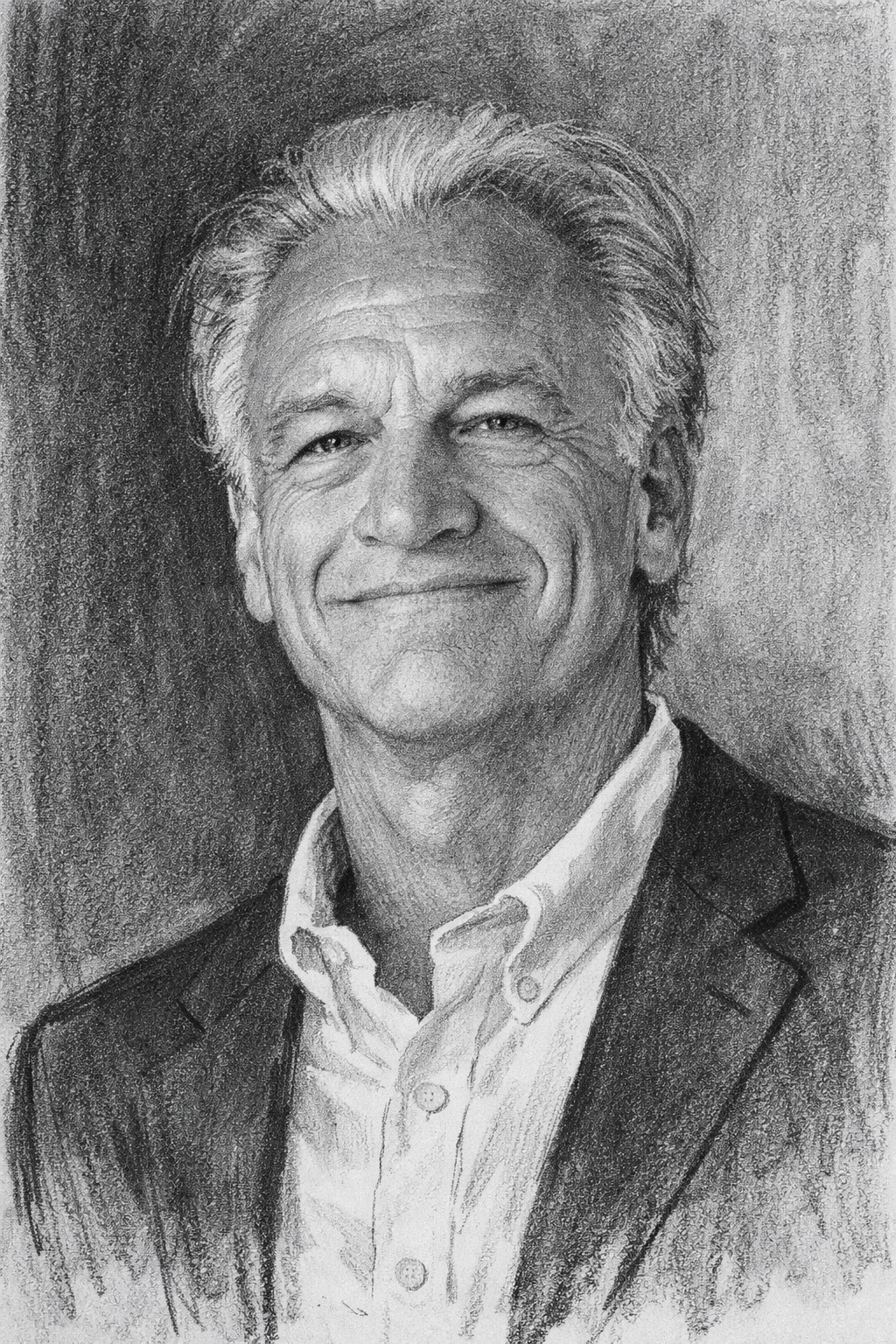
By Kyle Ogden
In the heart of a busy city, there is a place where time slows.
You can feel it the moment you step inside. The noise softens. The pace eases. The constant forward motion of daily life gives way, if only for a moment, to something quieter, deeper, more enduring.
For fifty years, Thanks-Giving Square has offered that gift. At its heart, Thanks-Giving Square exists to help shape the culture of a city—not through force or argument, but by quietly forming people in the practice of gratitude and other virtues, one life at a time.
It is easy, in a fast-moving world, to overlook places like this. They do not announce themselves loudly. They do not compete for attention. They simply remain—steady and open—waiting for those who are willing to pause.
And yet, what happens in such places is anything but small.
Here, strangers sit side by side in silence. Here, prayers are offered in many languages. Here, children encounter an idea that is both ancient and urgently needed: that gratitude is not reserved for special occasions, but practiced in the ordinary rhythms of life.
Fifty years ago, the founders of Thanks-Giving Square imagined something both simple and profound: that a great city should also have a sacred pause.
They believed that gratitude is more than a feeling. It is a discipline. A way of seeing. A way of being in the world.
And so they created not just a place, but a possibility—a quiet invitation to remember what matters most.
For half a century, that invitation has endured.
But anniversaries are not only about looking back. At their best, they are moments of clarity—moments that ask not only what has been built, but what must now be carried forward.
Because Thanks-Giving Square was never meant to stand still.
It was planted, from the beginning, as something living.
And living things are meant to grow.
We find ourselves today in a world that, in many ways, feels more connected than ever—and yet, often more divided. We move quickly. We communicate constantly. And still, many feel unseen, unheard, and alone.
In such a moment, the quiet work of gratitude may seem almost too simple.
But it is precisely what is needed.
Gratitude has a way of changing how we see one another. It softens what has grown hard. It opens what has been closed. It reminds us that, beneath our differences, we share something fundamental: a common human longing for connection, for meaning, for belonging.
And when that shift begins—when even a few people begin to see the world through the lens of gratitude—it does not remain contained. It moves outward.
Conversations change. Relationships deepen. Communities begin, slowly and sometimes quietly, to heal.
This is the deeper legacy of Thanks-Giving Square.
Not simply the chapel, or the garden, or the gathering spaces—though each of these matters—but the idea that a city can be shaped not only by its buildings and institutions, but by the spirit in which its people live together.
The next fifty years will ask more of us.
They will bring new challenges we cannot yet fully see. New technologies. New patterns of life. New pressures on our shared civic fabric.
But they will also bring new opportunities—to renew, to reconnect, to reimagine what it means to live together well.
In that future, places like Thanks-Giving Square will matter even more.
They will serve as anchors in a changing world. As spaces where people can step away from the noise and rediscover a sense of perspective. As places where gratitude is not only spoken, but experienced.
As the Square grows, welcoming more visitors, expanding its programs, and adding spaces like the Humanitarium, the Learning Center, and the Center for Human Flourishing, the experience of this place will inevitably change. It may become busier. Less quiet. Less hidden. And with that change comes a question worth holding carefully: how do we preserve the spirit of stillness at the heart of Thanks-Giving Square even as its reach expands? The answer will not be found in resisting growth, but in guiding it—ensuring that even as more people come, each one can still encounter that same sense of pause, reflection, and quiet invitation that has defined this place from the beginning.
And perhaps most importantly, these new planned changes will serve as catalysts.
Catalysts for conversation that is both honest and humane.
Catalysts for relationships that cross lines too often left unbridged.
Catalysts for a renewed commitment to the simple, demanding work of caring for one another.
But this next chapter will not write itself.
It will depend on all of us.
On those who choose to invest their time, their resources, and their energy in sustaining this place. On those who believe that gratitude is not a luxury, but a necessity for a healthy society. On those who are willing to help carry this vision forward into a new generation.
Because the future of Thanks-Giving Square is not ultimately about a location.
It is about a way of life.
A way of life that says we will pause, even when the world urges us to hurry.
That we will listen, even when it would be easier to move on.
That we will choose gratitude—not once a year, but as a daily practice that shapes who we are becoming.
Imagine this city fifty years from now.
The skyline will have changed. The technologies we rely on will be different. The rhythms of daily life will, in many ways, be unrecognizable.
And yet, I hope—and I believe—that in the center of that future city, someone will still step into this place.
They will walk into the chapel. They will sit in silence. They will look up, and for a moment, feel something shift within them.
Something simple. Something enduring. Something deeply human.
They will feel gratitude.
And in that moment, the vision of the founders will still be alive—not only in stone and glass, but in people. In community. In the living spirit of this city.
The next fifty years begin now.
And each of us has a role to play in shaping them.
Kyle Ogden is president and CEO of the Thanks-Giving Foundation.