
HIGHER GROUND: The Most Important Words We May Never Say
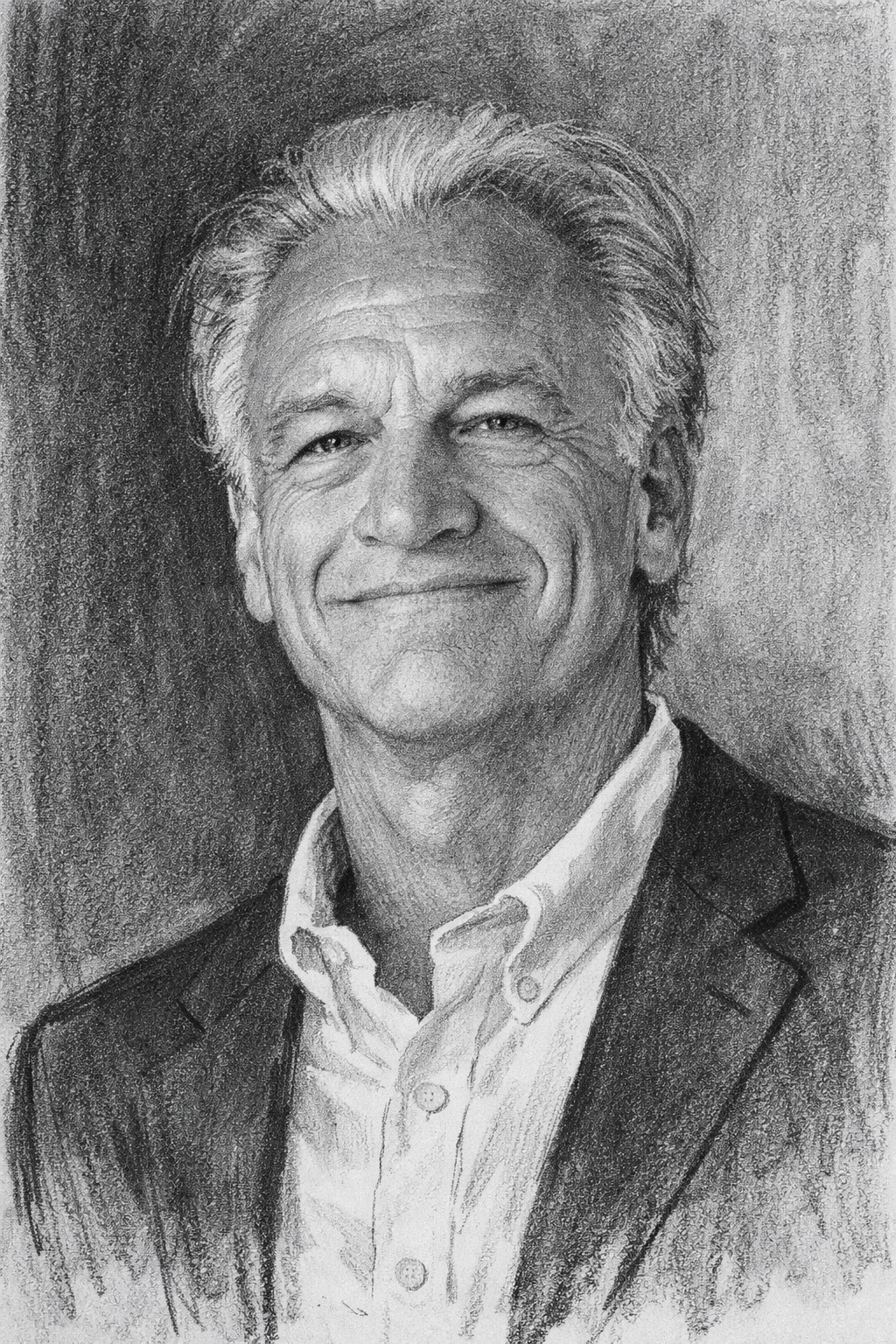
By Kyle Ogden
Every community has a choice to make.
We can organize ourselves around fear or around trust. Around scarcity or abundance. Around suspicion or gratitude. Around the question, "Who belongs?" or the deeper question, "How do we remember that we already belong to one another?"
In a moment when division often feels like our default setting, perhaps one of the most transformative civic practices available to us is also one of the simplest.
Just like me.
These three words, drawn from an ancient contemplative practice, invite us to pause before making another person into a stereotype, an adversary, or a stranger.
Just like me, this person wants to be happy.
Just like me, this person has experienced disappointment.
Just like me, this person worries about those they love.
Just like me, this person has known grief.
Just like me, this person hopes tomorrow will be better than today.
The practice does not erase differences. It does not ask us to abandon convictions or ignore injustice. It does something more foundational: it reminds us that before we are neighbors or strangers, Democrats or Republicans, immigrants or lifelong Texans, wealthy or struggling, we are human beings sharing the same fragile condition.
That recognition may be one of the greatest gifts we can offer one another.
This vision feels deeply at home within the mission of Thanks-Giving Square, where as a place and a movement, we bring people together across differences and inspire a better way to live together.
For nearly half a century, the Square has stood as more than a landmark in downtown Dallas. People of many faiths and people of no religious affiliation alike have entered its spaces seeking quiet, perspective, and hope. It has served as a public invitation—a place where gratitude becomes a bridge across traditions, cultures, and beliefs.
Gratitude has always been larger than saying "thank you." It is a way of seeing…a paradigm or filter through which a person lives his or her life.
Gratitude asks us to recognize that our lives are not self-made. Every breath we take depends upon countless gifts we neither earned nor created: parents and teachers, farmers and first responders, friends and strangers…even sunshine and rain. Indeed there are likely some helping breezes and other external forces that we may never even know have occurred.
The "Just Like Me" practice extends this same vision outward.
It asks us to recognize that the person standing across from us is also living a life held together by invisible hopes, fears, disappointments, and dreams. They, too, are someone's child. Someone's parent. Someone's friend. Someone carrying burdens we cannot see.
When we remember this, something remarkable happens.
Curiosity begins to replace certainty.
Listening becomes more important than winning.
Respect becomes possible even where agreement does not.
None of this requires us to surrender moral clarity.
In fact, recognizing our shared humanity strengthens our virtuous self. We can observe differences without discounting them.. We can challenge harmful ideas without denying the dignity of those who hold them. We can hold people accountable while refusing to reduce them to the worst thing they have ever done.
A cultural shift of this scope and scale may seem overly ambitious. But Dallas knows something about ambitious visions.
Our city has been built by people willing to imagine what did not yet exist. Yet the future before us is not only about new buildings, new businesses, or new technologies. It is also about the kind of people we choose to become together.
The strongest communities are not built merely through economic investment. They are built through relational investment.
Trust.
Hospitality.
Humility.
Civility.
Gratitude.
These are forms of civic infrastructure every bit as essential as roads and bridges.
Imagine what might happen if every conversation began with the quiet reminder, "Just like me."
What if educators carried it into classrooms?
What if business leaders carried it into boardrooms?
What if elected officials carried it into legislative debates?
What if families carried it around dinner tables?
What if each of us carried it into the next difficult conversation we are almost certain to have?
The practice costs nothing. Yet it changes everything. It reminds us that every person we encounter possesses an inner life as rich and complex as our own. Every face reflects a story we have not lived. Every life contains unseen joys and hidden wounds.
Gratitude prepares us to notice this. And once we notice it, compassion becomes less of an aspiration and more of a habit.
Perhaps this is one reason gratitude remains such a powerful force for civic renewal. It shifts our attention away from what separates us and toward what sustains us together.
Not uniformity.
Not agreement.
Not the absence of conflict.
Shared humanity.
At Thanks-Giving Square, visitors from around the world gather beneath one sky. They arrive carrying different histories, different convictions, and different languages. Yet for a moment, they stand within a place dedicated to a simple but profound truth: gratitude has the power to unite where fear divides.
Our city—and our world—needs more places like that.
But even more, it needs more people like that.
People willing to pause before judging.
People willing to listen before dismissing.
People willing to remember that beneath every label lives a human being hoping, fearing, struggling, and longing — just like me.
Kyle Ogden is President and CEO of the Thanks-Giving Foundation.